
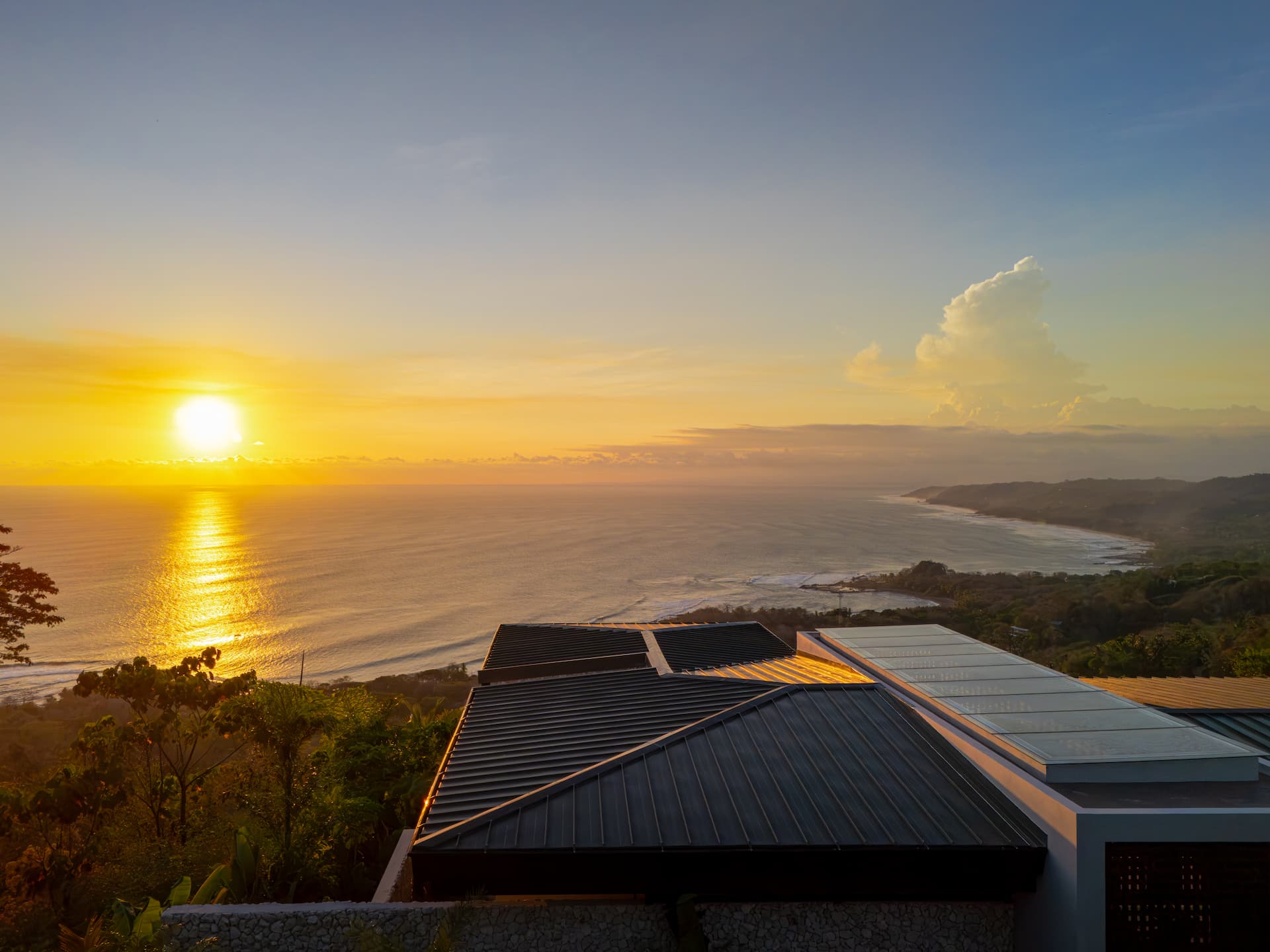
Seven days is the most common length of a first Costa Rica trip, and it is a well-chosen duration. It is enough time for the country to reveal itself properly — for the wildlife to become familiar rather than surprising, for the pace of a destination to settle into something that feels like your own rhythm, and for at least one morning to begin with no particular plan.
The challenge with seven days is focus. Costa Rica holds enough variety to fill three weeks without repetition, which means a week-long itinerary requires genuine choices rather than a compressed version of everything. The travelers who leave most satisfied are almost always the ones who chose depth over breadth, two or three stops done well, rather than five stops done quickly.
This itinerary is built for guests arriving into San José and spending their week on the Pacific coast, with the option of one inland extension for those who want a change of landscape before returning.
The temptation with a week in Costa Rica is to see as much as possible. The reality is that travel between zones takes time, and each transfer day is a day not spent at the villa.
A seven-day itinerary works best as two stops of three nights each, with arrival and departure managed around the edges. That structure gives each destination enough time to produce a genuine sense of place, the second morning in a location is always better than the first, and the third is when the trip properly begins.
Alternatively, one stop of five or six nights produces something different: a deeper familiarity with a single place, its beaches, its restaurants, its surf breaks, its morning light. For guests who travel to decompress rather than to discover, this is often the more satisfying choice.
This is the itinerary for guests who want contrast within the Pacific coast. Two genuinely different versions of the same ocean, separated by a few hours of drive or a short domestic flight.
Arrive into San José and transfer directly south, by domestic flight to Quepos or by private driver along the coastal highway. By early afternoon you are in the hills above Dominical or Uvita, the South Pacific unfolding below.
The South Pacific has a quality that first-time visitors consistently underestimate and repeat visitors consistently return for. The landscape is wilder than the north. The jungle presses closer to the coast. The beaches are less developed and more dramatic. And the wildlife — scarlet macaws, howler monkeys, sea turtles, humpback whales in season — is present in a way that requires no particular effort to find.
Two nights here suits the itinerary well. It allows a morning at Marino Ballena National Park, a whale watching tour if the timing falls between July and November, and an evening long enough to understand why guests who come for two nights often wish they had booked four.
Maison R&V properties in this zone include Casa La Vista, perched above the Whale's Tail with views across the national park, Casa Solaz, Villa Bella Vina, and a range of properties in the hills above Dominical and Uvita suited to couples, families, and small groups.
→ Read our guide to whale watching in Costa Rica
A domestic flight from Quepos to the Nicoya Peninsula, or a scenic drive north, brings the trip to its central section. Three nights here is the right amount — enough to surf, to find a favourite café, to have one afternoon with no agenda, and to understand why people keep coming back.
Santa Teresa is the natural choice for guests drawn to energy, surf, and a destination with genuine creative character. The beach is long and consistent. The restaurants are surprisingly good. The surf culture is real rather than manufactured, and the town retains a looseness that more developed Costa Rican destinations have lost.
Casa Taman in northern Santa Teresa offers direct beach access within a private estate, its pool and garden functioning as a natural gathering point between sessions. Casa Lanui, on the same grounds, accommodates larger groups. Villa Kuji Biri in Mal País, ten minutes south, offers a more secluded version of the same coastal experience.
Esterillos, for guests who prefer quiet over energy, produces something different. The beach is long, almost always empty, and bordered by jungle. Villa Assinie sits directly on it. Three nights in Esterillos produces a quality of stillness that is increasingly difficult to find on the Pacific coast.
→ Read our guide to beachfront villas on the Pacific coast
The final two days belong to the villa. No transfers, no new destinations. A morning surf or a long walk on the beach before breakfast. An afternoon with a massage arranged on the terrace. An evening that ends slowly, the last one of the trip already feeling like something worth holding onto.
Departure on day seven, either by domestic flight back to San José or directly from the Nicoya Peninsula via the small airport at Tambor.
For guests who want depth rather than movement, seven days in a single location produces a fundamentally different kind of trip.
Nosara is the strongest case for this approach on the Pacific coast. The destination has enough variety, within a small geography, to sustain a full week without any day feeling repetitive. Playa Guiones for surf. Playa Pelada for a quieter morning. The restaurants around town, each worth a visit in its own right. Yoga and wellness practitioners of genuine quality. And the particular atmosphere of the Nicoya Blue Zone, which becomes perceptible after a few days in a way it cannot in a shorter stay.
Casa con Vista, Casa Vivo, Raintree Villa, Calla Lily, and Castillo Colonial for larger groups all offer week-long stays that use Nosara's variety well. The villa becomes the base, and the week organises itself around what the destination naturally provides.
The same logic applies to Tamarindo, which suits guests who want a beach town with more social infrastructure, and to the South Pacific, which suits guests for whom nature is the primary draw and a week of early mornings, wildlife, and long evenings on a jungle terrace is the ideal version of a week away.
Transport between two stops works best by domestic flight or private driver rather than rental car. The drive between the South Pacific and the Nicoya Peninsula is scenic and manageable in the dry season, but takes a full day and requires navigation. A private driver adds local knowledge and removes the logistics question entirely.
Timing within the week matters. Mornings on the Pacific coast are consistently the best part of the day. Program arrivals, transfers, and any administrative tasks in the afternoon, and keep mornings free for the activities, the beach, and the particular quality of Pacific light before ten o'clock.
The dry season, December through April, is when a seven-day Pacific coast itinerary is at its most reliable. Green season brings lush landscapes and fewer crowds, but road conditions in some zones require local knowledge. Maison R&V coordinates transfers and local logistics for all itineraries in the portfolio, with current conditions factored into every recommendation.