
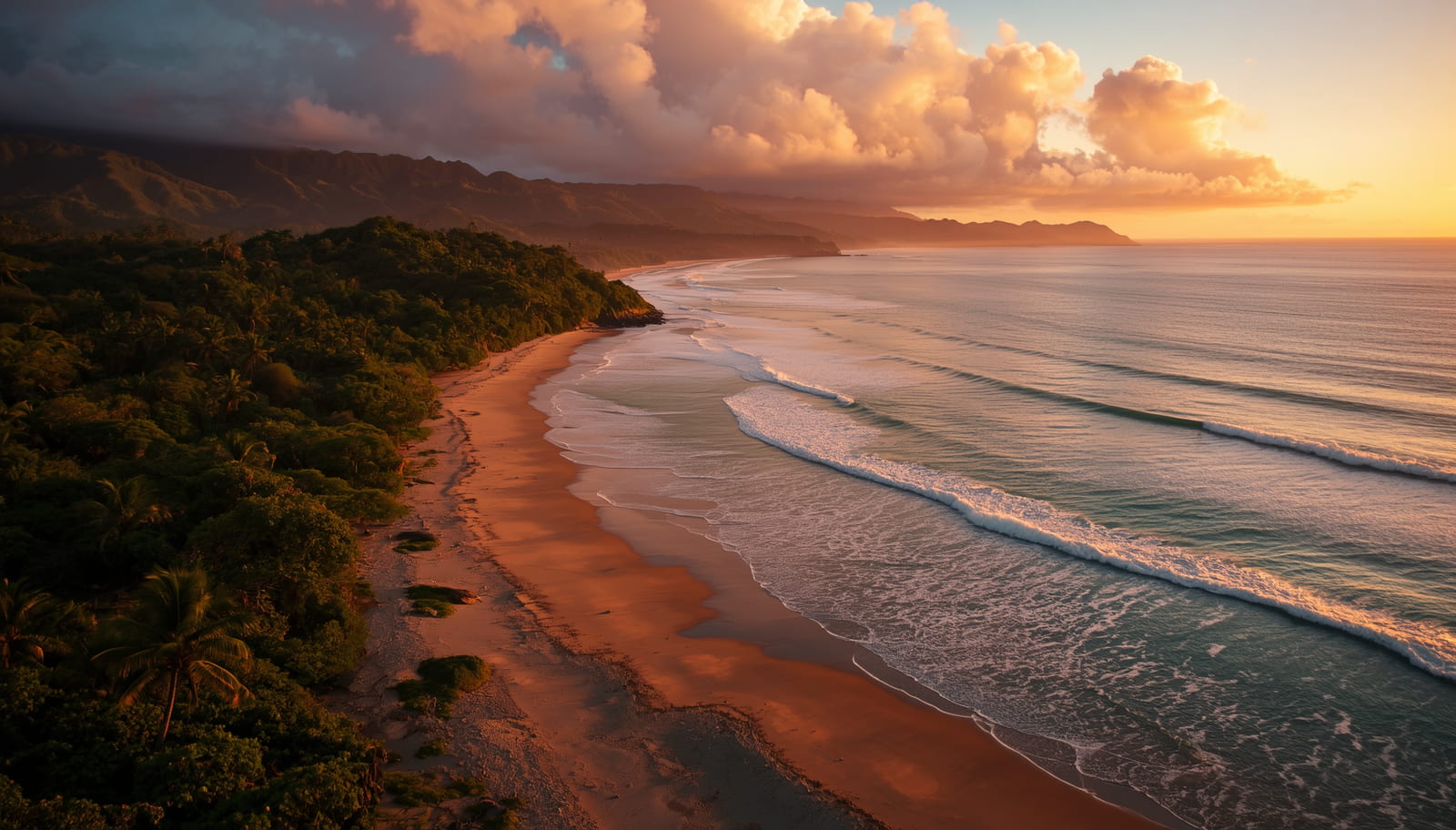
Costa Rica does not have a bad season. It has two distinct ones, each with its own character, its own light, and its own particular pleasures. Understanding the difference is less about avoiding rain and more about knowing which version of the country suits the trip you want to have.
That distinction matters more than most travel guides suggest. The dry season and the green season in Costa Rica are not simply variations in weather. They produce genuinely different experiences, different crowds, different landscapes, different rhythms. Choosing well starts with knowing what you are actually looking for.
Costa Rica divides its year into two main seasons determined by rainfall rather than temperature.
The dry season runs roughly from December through April. Trade winds blow in from the northeast, skies stay consistently clear, and the Pacific coast in particular delivers long days of reliable sunshine. Humidity is manageable, roads are easier, and the landscape takes on a golden, drier quality, particularly in Guanacaste and the Nicoya Peninsula, where the dry forest turns ochre and the light becomes cinematic.
The green season, also called the rainy season, runs from May through November. Rain arrives in the afternoons and evenings rather than all day. Mornings are often clear. The landscape responds immediately, within weeks of the first rains, Costa Rica turns a deep, saturated green that the dry season cannot replicate. Waterfalls run full. Rivers swell. Wildlife becomes more active. The country reveals a more lush, dramatic version of itself.
A third period sits between the two: late November and early December, when the rains ease and the crowds have not yet arrived. Many experienced travelers consider this the best-kept secret on the Costa Rican calendar.
December through April on the Pacific coast is what most travelers picture when they imagine Costa Rica. Long beach days, consistent surf, blue skies from morning to evening, and the kind of reliability that suits families and first-time visitors.
The Nicoya Peninsula (Santa Teresa, Mal País, Nosara, Sámara) is at its most accessible and most social during these months. The roads are manageable, the surf is consistent, and the energy of destinations like Santa Teresa reaches a particular pitch during the holiday weeks of December and January. Restaurants fill up. The best villas book well in advance.
Guanacaste and Tamarindo follow a similar pattern. The beaches here are wide and dry, the sunsets reliable, and the general ease of travel higher than at any other time of year. For groups celebrating milestones, families with school-age children, or anyone visiting Costa Rica for the first time, this is the natural choice.
The trade-off is predictable. Peak season means peak demand. The most desirable properties require booking months ahead, and popular beaches see considerably more visitors than at other times.
May through November transforms the Pacific coast into something quieter and, for many travelers, more beautiful.
The landscape deepens. The jungle behind Santa Teresa and Esterillos turns a shade of green that is almost difficult to believe. Howler monkeys are louder. Birds are more visible. The light after a morning rain has a particular quality, clean, saturated, almost photographic.
Surf conditions on the Nicoya Peninsula and the South Pacific often improve during green season. Swells become more consistent and more powerful. For surfers with experience, the months of May through October can deliver some of the best waves of the year.
The pace slows. Restaurants are quieter. The roads, while muddier, are less travelled. A private villa in Esterillos or the hills above Dominical in October feels genuinely removed from the world in a way that peak season simply cannot replicate.
For travelers whose primary goal is restoration, privacy, and a deep immersion in the landscape, green season on the Pacific coast is worth serious consideration.
The Caribbean coast of Costa Rica operates on an almost inverted seasonal pattern, and this is where many travelers are caught off guard.
While the Pacific is dry from December to April, the Caribbean coast receives rain year-round, with its driest and most reliable periods falling in September, October, and February through April. These are the windows when Cahuita, Puerto Viejo, and the surrounding coastline offer the calm turquoise water and manageable conditions that the region is capable of delivering.
The Caribbean has a distinct character that the Pacific does not share. The culture is different, Afro-Caribbean influences, a slower pace, a cuisine built around coconut, plantain, and fresh seafood. The jungle is denser and wetter. The wildlife, including sloths, toucans, and poison dart frogs, is abundant and close.
Keep it Green House, nestled within lush tropical gardens on the Caribbean coast, suits this version of Costa Rica particularly well. Three bedrooms, eco-luxury design, and a setting where the sounds of the rainforest are constant and the pace of the day adjusts itself naturally to the environment.
For travelers who want to experience both coasts, a split itinerary, Pacific for the surf and sunsets, Caribbean for the jungle and culture, is one of the most rewarding ways to see the country. Maison R&V can coordinate villas across both coasts as part of a single bespoke trip.
→ Read our guide to beachfront villas on the Pacific coast
The South Pacific (Dominical, Uvita, the Osa Peninsula) receives more rainfall than the north but distributes it differently. Even in green season, mornings here are often clear and the afternoons spectacular.
This zone suits travelers who want dramatic landscapes and genuine wilderness alongside their villa comfort. Marino Ballena National Park, with its famous Whale's Tail sandbar, is best visited during humpback whale season, which runs from July to November and again from December to April. Two migrations overlap in Costa Rica, a biological anomaly that makes the South Pacific one of the best whale-watching destinations in the Western Hemisphere.
The hills above Dominical and Uvita hold some of the most architecturally considered villas in the Maison R&V portfolio. Properties like Casa Bliss, Villa Bella Vina, and Casa Solaz offer sweeping Pacific views that are, if anything, more dramatic during green season when the jungle is at its most saturated and the cloud formations above the ocean are genuinely extraordinary.
Beyond the broad seasons, a few specific windows are worth knowing.
Christmas and New Year: the most in-demand period of the year on the Pacific coast. Villas book out months in advance. The energy is high, the prices peak, and the experience is social and celebratory. Book early or plan for January, which retains the dry season conditions with slightly less pressure.
Easter week (Semana Santa): a major domestic travel period in Costa Rica. Beaches become busy with local visitors. Heading inland or to less-travelled zones during this week is worth considering.
September and October: the quietest weeks on the Pacific coast and among the wettest. For guests who genuinely want seclusion, a deeply green landscape, and the feeling of having a destination to themselves, these months deliver exactly that.
February and March: arguably the sweet spot of the dry season. The holiday crowds have thinned, the weather remains reliable, and the surf is still good. Many experienced travelers who know Costa Rica well plan around these months specifically.
The right time to visit Costa Rica depends entirely on what the trip is for.
Families with fixed school holidays will naturally gravitate toward December, January, and the dry season months. Surfers and travelers seeking a more intimate experience with the landscape may prefer the shoulder months or green season. Couples focused on privacy and restoration often find that October or early November offers exactly the quiet they are looking for.
→ Read our guide to planning a romantic escape in Costa Rica
→ Read our zone-by-zone comparison of the dry and green seasons
What changes across every season is not the quality of the destination but the quality of the experience available within it. Costa Rica rewards visitors in every month of the year. The decision is simply which version of it you want to find when you arrive.