
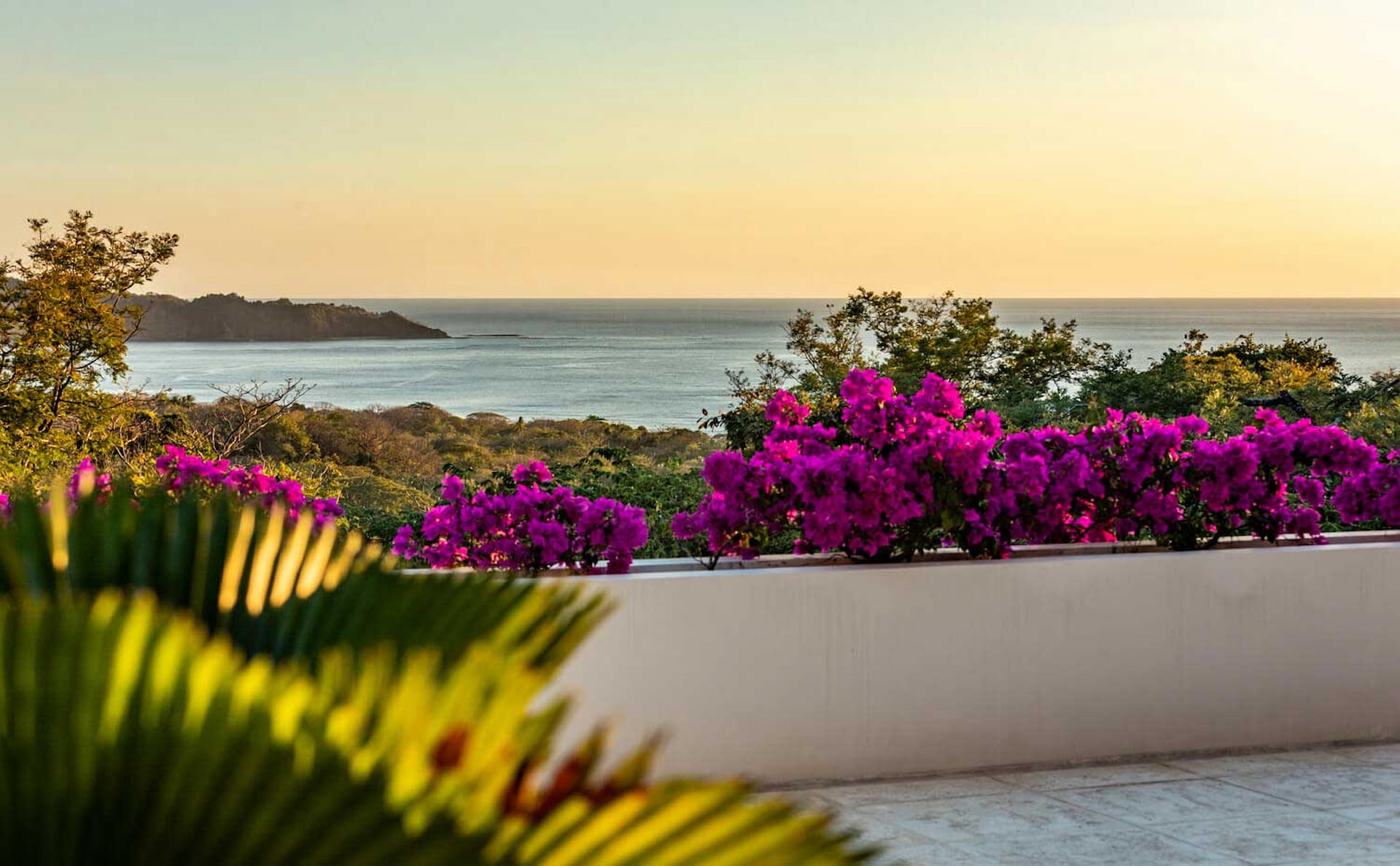
Nosara does not announce itself. The road narrows somewhere after Nicoya, the jungle closes in, and by the time you reach Playa Guiones the pace has already shifted. It happens without effort. That shift is the point.
Nosara has become one of the most sought-after destinations on Costa Rica's Pacific coast, and for reasons that are specific rather than generic. It is not simply beautiful, though it is. It is not simply well-located, though the Nicoya Peninsula offers some of the best surf and light on the coast. What Nosara has, and what most destinations eventually lose as they develop, is a coherent identity. The town knows what it is. The people who live and work here have shaped it with intention, and the result is a place that rewards guests who arrive with the same quality of attention.
This guide covers what to know before you go, what Nosara actually offers across its different zones, and how a private villa stay makes the most of everything the destination provides.
Nosara is not one beach. It is three distinct coastal environments within a short drive of each other, and understanding the differences shapes how a week unfolds.
Playa Guiones is the longest and most active. A wide, grey-sand beach with consistent surf that has made Nosara's reputation among serious wave riders and beginners alike. The break here is forgiving enough for first-timers and varied enough to keep more experienced surfers engaged across a full week. The beach stretches for several kilometers in each direction, and even in peak season it rarely feels crowded in the way that more developed Costa Rican beaches do. The restaurants, yoga studios, and surf schools that have grown up around Guiones are within walking distance of the sand, which gives the beach a self-contained quality that suits guests who want everything within reach.
Playa Pelada, a fifteen-minute walk north of Guiones, is smaller, rockier, and considerably quieter. At high tide it becomes a dramatic arc of waves against dark volcanic rock. At low tide the tidal pools reveal a different ecosystem entirely, and the beach opens up enough for a long walk. The atmosphere here is residential rather than touristic; the families and couples who come to Pelada tend to be guests who have been to Nosara before and know what they are looking for.
Playa Garza, further north toward Sámara, is the quietest of the three. A small, sheltered bay with calm water suited to swimming, kayaking, and the kind of afternoon that has no particular agenda. For guests with young children, or for days when the surf is not the point, Garza offers something the more active beaches cannot.
Nosara has one of the highest concentrations of yoga studios, wellness practitioners, and health-oriented restaurants per capita of any beach town in Central America, and this is not accidental. The community that has grown here over the past two decades has been shaped by people who came for the surf and stayed for something harder to define: a quality of daily life that the Blue Zone research eventually gave a name to.
The Nicoya Peninsula is one of five Blue Zones in the world, the regions where people live measurably longer than anywhere else. The longevity research points to diet, physical activity, social connection, and a cultural concept called plan de vida, roughly translated as a sense of purpose, as the contributing factors. In Nosara, these show up in the texture of daily life. The food culture here takes fresh, local ingredients seriously. Movement is constant and natural. The community is genuinely connected across generations and backgrounds.
For the traveler, this translates into an environment where wellness choices are easy rather than effortful. The yoga class is excellent and accessible. The restaurants make it simple to eat well. The surf provides the kind of full-body, fully-present physical experience that most people cannot access in their daily lives. And the pace of the town, unhurried without being sleepy, creates the conditions for the kind of rest that actually restores.
→ Read our guide to the Nicoya Blue Zone Costa Rica
The restaurant scene in Nosara has matured considerably without losing the character that makes the town worth visiting. The best places here are small, locally sourced, and specific in their offering.
The area around Playa Guiones has a concentration of good options within easy reach of the beach. Breakfast tends toward fresh fruit, açaí bowls, cold-pressed juice, and the particular quality of Costa Rican coffee that arrives differently when the air around it is humid and warm and ocean-adjacent. Lunch is lighter, often eaten close to the water. Dinner is the meal that benefits most from a reservation, particularly in the high season months of December through April.
For guests staying in a private villa, the option of a private chef arranged through Maison R&V means that many of the best meals of the week happen at home, built around local ingredients and the preferences of the specific group rather than a fixed menu. A chef who knows the Nosara market, who sources from the local fishing community and the organic farms in the hills above town, can produce dinners that the restaurants, however good, cannot replicate.
Nosara is spread across a larger geography than most guests expect. The different beach zones, the town of Nosara inland, and the hillside properties above the coast are connected by a network of unpaved roads that are manageable in the dry season and require more attention in the green season.
A four-wheel-drive vehicle is the practical choice for most stays. Quad bikes and ATVs are available for rent and suit guests who want to move between beaches without the formality of a car. Golf carts work for the flatter zones close to Guiones but are less suited to the steeper roads leading to hillside properties.
For guests arriving by domestic flight, the small airstrip at Nosara receives regular service from San José with Nature Air and other operators, making the transfer significantly more efficient than the five-hour drive from the capital. The flight takes approximately forty-five minutes and the landing approach, over jungle and ocean simultaneously, is one of the better arrivals in the country.
Nosara's geography, spread across hillsides and beachfront zones with a road network that requires navigation, is actually well-suited to private villa accommodation. A well-positioned property gives the week a base from which everything is manageable without requiring constant coordination.
The villas that Maison R&V manages in Nosara reflect the range of the destination. Casa con Vista is a contemporary masterpiece suspended between ocean and sky, one of the most architecturally significant properties in the zone. Casa Vivo, newly renovated and positioned between Playa Guiones and Playa Pelada, offers sweeping ocean views and complete privacy in the lush hills above town. Raintree Villa, on a private acre above Playa Pelada, is a modern jungle estate suspended over the canopy with a quality of seclusion that few properties in Nosara can match. Calla Lily brings minimalist eco-chic design to the hills of Las Huacas, with natural light and an orientation toward the landscape that feels deliberate at every turn. Castillo Colonial, the largest property in the zone, accommodates up to thirty-four guests and suits retreats, large family gatherings, and celebration travel at real scale.
Each property offers a different relationship with Nosara, from the surf-adjacent convenience of Guiones to the elevated remove of the hillside estates. The right choice depends on how the week is intended to be spent.
Nosara divides cleanly between its two seasons, and each produces a genuinely different version of the destination.
The dry season, December through April, is when Nosara is at its most social and most reliable. The surf is consistent and clean, the roads are easy, and the energy of the town reaches a pitch that suits guests who want to be part of a destination rather than simply staying in one. The high season weeks of December and January book well in advance; February and March offer the same conditions with slightly more space.
The green season, May through November, brings a different Nosara. The landscape deepens to a saturated green within weeks of the first rains. The town quiets. The surf, particularly from July through October, often improves as south swells arrive with more consistency. Rates soften and the experience becomes more intimate. For guests who want Nosara without the high season energy, and who are comfortable with the possibility of afternoon rain, the green season is worth considering seriously.
October and early November are the quietest weeks of the year, with the highest rainfall and the most complete sense of having the destination to yourself.
→ Read our guide to the best time to visit Costa Rica
This is perhaps the most honest part of a guide to this destination.
Nosara works best for guests who arrive willing to slow down. The town does not perform itself for visitors. The surf does not adjust to your schedule. The restaurants close when they close. The roads require attention. The wildlife operates on its own timetable.
What the destination offers in return is genuine. The mornings here are extraordinary. The community is warm without being sycophantic. The surf is some of the best in Costa Rica. And the particular quality of an evening in Nosara, dinner at a table above the canopy with the light fading over the Pacific and no particular reason to be anywhere else, is one that guests return for specifically.
That is what Nosara is. Arrive prepared for it and the week will exceed what you planned. Arrive expecting a polished resort experience and you will miss what the place is actually offering.