
Tamarindo has a reputation. It is one of the most recognized beach towns in Costa Rica, which means it attracts a particular kind of skepticism from travelers who assume that popularity and quality are inversely related. That skepticism is worth setting aside. Tamarindo earns its standing for specific reasons, and understanding those reasons is the starting point for planning a stay that uses the destination well.
The town sits on the northern Guanacaste coast, roughly an hour from Liberia's Daniel Oduber International Airport and accessible without the long overland transfers that some Pacific coast destinations require. The beach is long, the surf is consistent, the sunsets are extraordinary, and the estuary that borders the town to the south creates a biological reserve that gives Tamarindo a natural boundary it has not outgrown.
What Tamarindo has developed into, over the past two decades, is a destination with genuine range. It suits first-time visitors who want an accessible introduction to Costa Rica's Pacific coast. It suits experienced travelers who return specifically for the surf conditions or the restaurant quality. And it suits groups and families who want a private villa with the social infrastructure of a beach town available when they want it and a house to retreat to when they do not.
Playa Tamarindo is the main draw and it delivers what it promises. A wide, sandy beach with a consistent beach break that has been producing surfers for thirty years. The wave suits beginners learning for the first time and intermediate riders developing their skills. It is not a wave for advanced surfers chasing power, but for the guest who wants to get in the water confidently and improve across a week, Tamarindo provides reliable conditions almost year-round.
The dry season, December through April, brings offshore winds that clean the surface and produce the kind of shaped, consistent wave that photographs well and surfs cleanly. The green season shifts the swell direction and can improve conditions for more experienced riders, though the trade winds that characterize the dry season are gone and the surface is less predictable.
Playa Langosta, a fifteen-minute walk south along the beach, is a different experience. The break here is more powerful and less forgiving, and the beach is considerably quieter. It suits intermediate and advanced surfers who want fewer people in the water and a wave with more consequence. The walk between Tamarindo and Langosta along the waterline, through the estuary outlet and past the nesting turtle beaches, is one of the more pleasant transitions between two distinct environments that the Guanacaste coast offers.
Tamarindo's southern boundary is defined by the Tamarindo estuary, a protected mangrove system that has functioned as both a biological reserve and a natural limit on the town's southward expansion. The estuary supports crocodiles, birds, and the marine turtle nesting activity that Playa Langosta has been known for since long before Tamarindo became a surf destination.
Kayaking through the mangroves in the early morning, when the light is low and the birds are most active, is one of the quieter pleasures of a Tamarindo stay. It requires no particular skill, takes two to three hours with a guide, and reveals a version of the Guanacaste coast that the beach and the town do not show. Crocodiles are visible from a safe distance. Herons, kingfishers, and occasional roseate spoonbills share the waterway. The tour ends back at the estuary mouth, where the town and the Pacific reconverge.
The restaurant scene in Tamarindo has grown considerably and now represents one of the stronger dining options on the northern Pacific coast.
The town's restaurants have matured past the beach-bar-and-grilled-fish formula that characterized the earlier version of the destination. There are now genuinely good options across a range of styles: fresh ceviche and seafood prepared with local catch, wood-fired pizza made with real attention to ingredients, sushi restaurants that source locally where possible, and the occasional chef-driven table that would hold its own in a more internationally recognized dining city.
The farmers market, held weekly, draws both the local community and visiting guests. Fresh produce, artisanal products, and prepared food from vendors who have been building their offerings for years. It is worth a morning, particularly for guests staying in a private villa who want to stock a kitchen with local ingredients.
For villa guests, the private chef option sits alongside rather than instead of Tamarindo's restaurants. A week that combines chef-prepared breakfasts and several in-villa dinners with a few evenings at the town's better tables tends to produce the most satisfying balance: the ease of staying in when the property earns it, and the pleasure of going out when the destination provides it.
→ Read our guide to private chef villa experiences in Costa Rica
Tamarindo's villa market reflects the destination's range. Properties here suit couples, families, and large groups, with options from intimate four-bedroom estates to large-scale properties that accommodate twenty or more guests.
Casa Monoi sits within an exclusive gated community, steps from both Playa Tamarindo and Playa Langosta. Four bedrooms, a refined beachfront setting, and the proximity to both beaches that suits guests who want to move between the town's social energy and a quieter stretch of coast without a car. For families or small groups who want Tamarindo at its most convenient, the position is close to ideal.
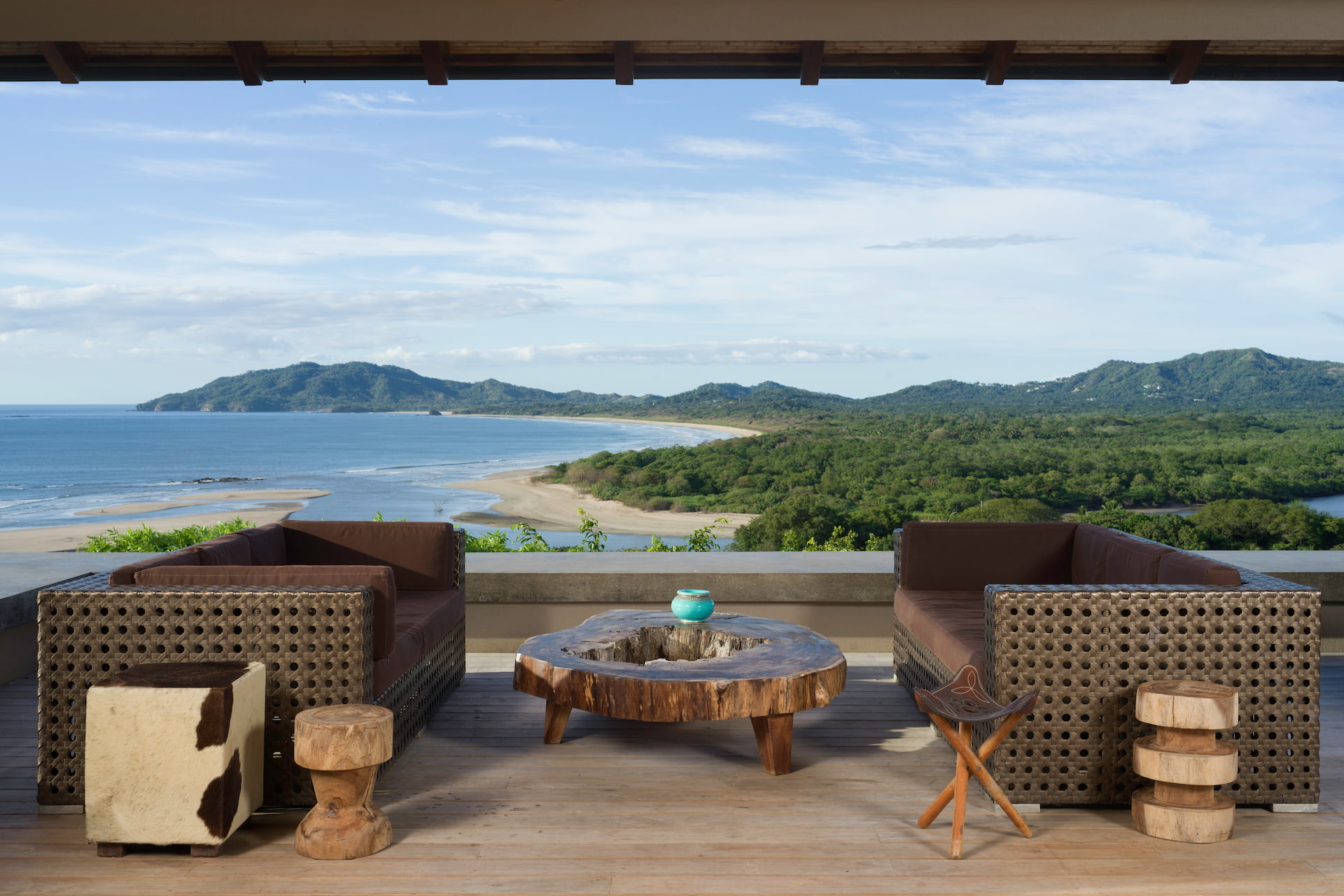
Villa Morabeza brings eight bedrooms, panoramic ocean and sunset views, and an indoor-outdoor design that makes the terrace the natural center of each evening. Up to twenty guests, a contemporary aesthetic, and minutes from both the beach and the town. The sunset from the Morabeza terrace, with the Pacific turning orange and the estuary glinting below, is one of those views that guests mention specifically when they describe what they remember about the week.
Casa Alang Alang occupies one of the most commanding positions in Tamarindo, perched on a private hillside at the entrance to town with sweeping views of the estuary and the Pacific coast. Eight bedrooms, 15,000 square feet of considered tropical design, and a scale that suits large family gatherings, reunion travel, and celebration groups who want a property that feels significant rather than merely large.
Sunset House, on the same private estate as Casa Alang Alang, adds five bedrooms and a more relaxed indoor-outdoor layout. Together, the two properties accommodate up to thirty-four guests across a single estate, creating the combination of scale and privacy that large groups require and single properties rarely deliver.
Casa Marlin, at Playa Hermosa just south of Tamarindo, offers six bedrooms in a refined Pacific hideaway that combines the Guanacaste coast's best qualities with a position away from the town's more social energy. For guests who want Tamarindo's surf and dining within reach but a quieter base to return to, Hermosa provides the distance that makes the combination work.
This deserves its own mention, because the sunsets in Tamarindo are genuinely different from other parts of the Pacific coast.
The Guanacaste coast faces almost directly west, and in the dry season the absence of cloud on the western horizon means the sun sets into the ocean cleanly, without the obscured horizon that affects sunset quality further south. The sky changes over the course of an hour in ways that are specific to this latitude and this coastline: deep orange, then pink, then the blue hour that settles after the sun has gone and the lights of the town begin to appear.
From a terrace above the estuary, the combination of the golden water below and the sky above produces an evening that is difficult to leave and easy to remember. It is one of the most consistent experiences Tamarindo offers, regardless of season.
Tamarindo is one of the most efficiently reached destinations on the Pacific coast, and this is part of its appeal for guests with limited time or direct international connections.
Liberia's Daniel Oduber International Airport receives direct flights from major North American hubs including Miami, Houston, Atlanta, Toronto, and New York. The transfer from Liberia to Tamarindo is approximately one hour by private shuttle or rental car. For guests arriving from Europe, a connection through Miami or another US hub typically puts Tamarindo within reach on the same day as departure.
San José's Juan Santamaría International Airport is also an option, with the drive north to Tamarindo taking approximately three and a half hours along the Interamericana. Domestic flights from San José to Tamarindo operate regularly and take approximately forty minutes.
The ease of access is one of Tamarindo's genuine advantages for international guests whose travel time is constrained. Arriving at a private villa by early afternoon on day one, rather than spending most of the first day in transit, changes the quality of the trip in ways that guests with tighter schedules notice immediately.
→ Read our guide to getting around Costa Rica
Tamarindo rewards guests who engage with what it actually is rather than comparing it to a quieter version of itself. It is a beach town with character, energy, and a social life. Those qualities make certain evenings better than they would be in a more remote destination. They also mean that guests looking for complete seclusion may find the town's presence more constant than they expected.
The private villas managed by Maison R&V in Tamarindo are positioned to offer both access and retreat. The town is available when you want it. The property is yours when you do not. That balance, a genuine beach destination with a private house to return to, is what Tamarindo does better than almost anywhere else on the Guanacaste coast.